You've found an animal that might need help, what next?

If the animal fits into any of these criteria, please contact a wildlife rehabilitator and/or bring to a veterinarian who can take wildlife.
Please read the next section below before trying to capture or contain wildlife for transport.
If the animal does not fit these criteria, but you are still concerned please reach out to a wildlife rehabilitator for further advice.
Wildlife rehabilitators are not authorized to rehabilitate venomous snakes, black bears, moose, or white-tailed deer. Additionally, for any issues related to coyote, bobcat, fisher, river otter, and beaver, please contact Mass Wildlife at 508-389-6300
Take it, or Leave it?
Sometimes it can be hard to tell if an animal really needs to come into care, or if it's just doing what nature tells it to. How do we know if the nest of bunnies is being fed? What about that bird hopping around on the ground?
Here are some quick signs that an animal might need help!
-
The animal is thin, cold, and weak.
-
The animal has flies circling it, or has maggots
-
They have been in contact with a cat. Even if there are no visible injuries!
-
They appear to have a broken bone such as a leg, wing or jaw.
-
The mother is known to be dead, or dead siblings have already been found
Safety First!
Capture and Transport
Please be aware that MJ Rodent Rehab is not liable for injuries to person or property during the capture or transport of an animal to our facility. Do not attempt to capture or transport an animal unless you have the knowledge and means to do it safely.
Emergency (temporary) care of wildlife involves providing some assistance until the animal is able to be placed with a veterinarian or wildlife rehabilitator. Please keep in mind that most animals taken into care are in critical condition and should be transported to a professional within 8 hours whenever possible.
The most important thing is to capture the animal without injury to you, other people, or the animal. If you do not have the ability to capture it safely, you can try contacting your local animal control officer for assistance, or keep an eye on the animal from a safe distance until help arrives.
Some items that can be useful:
-
Thick leather gloves to protect from nails and teeth
-
An appropriate cage/container (will vary but should be sturdy, chew/escape proof, and able to be moved without fingers going inside where an animal can bite)
-
A broom or stick to gently coax an animal into the cage to avoid contact with you
-
Note: Rabies can be transmitted through contact with an animal even if you are not bitten or scratched. Rabies is Fatal in humans.
-
Once the animal is captured move them to a quiet, dark, warm place away from people and pets. Place a heat mat under half of the cage on low to provide heat that they can move away from if they get too hot.
DO NOT offer food or water unless told to by a rehabilitator or veterinarian.
Species Specifics: Temporary Care - Coming Soon
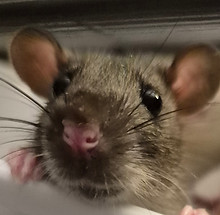
Mice/Rats
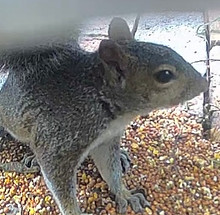
Squirrels
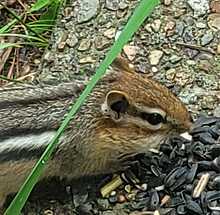
Chipmunks
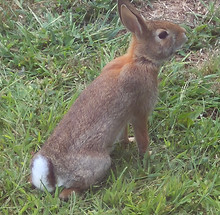
Rabbits
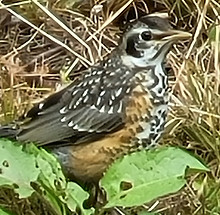
Birds
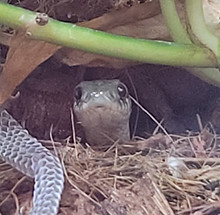
Reptiles / Amphibians
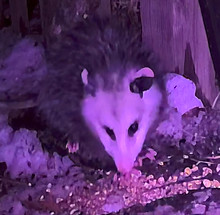
Opossums
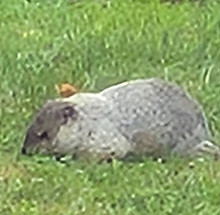
Rabies Carriers